Floors
At Shyne, we clean many different types of floors. Each material has its own characteristics, but our general approach is simple:
Use the right technique, minimal water and clean microfiber mops to achieve a spotless result.
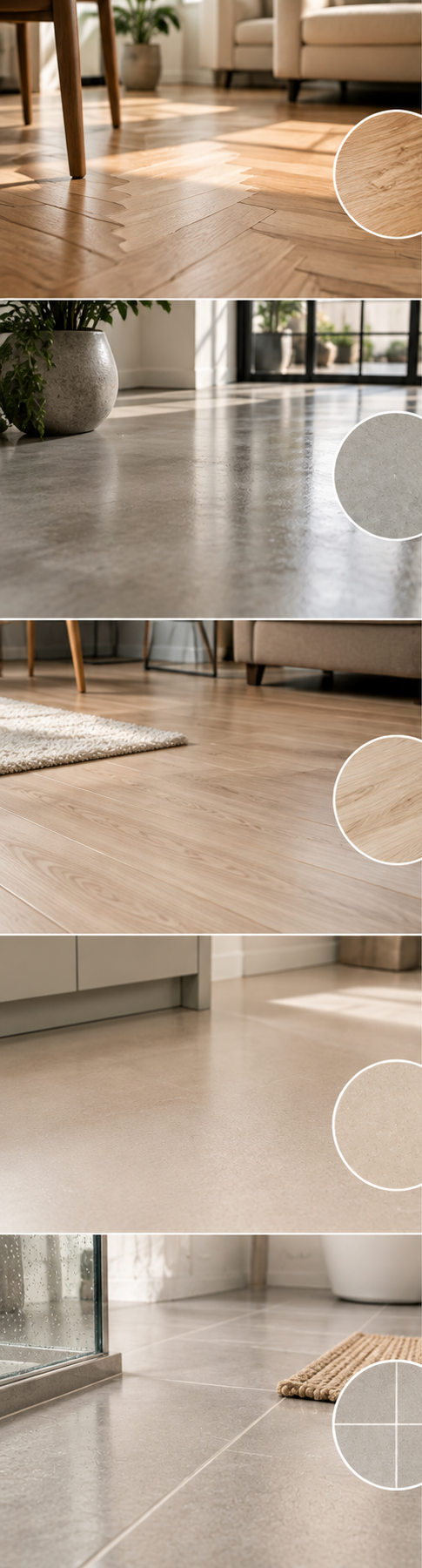
01 / Different Types of Floors
Wooden Floors
Wooden floors, including parquet and solid wood, are sensitive to moisture and chemicals.
Use a lightly damp mop with clean water.
Never soak the floor or leave standing water.
Follow the Snake Technique and change mops regularly.
Remember: Too much moisture can permanently damage wooden floors.
Concrete Floors
Concrete floors can easily show streaks and watermarks, especially on polished surfaces.
Use clean water and a lightly damp mop.
Avoid excessive moisture to prevent streaks.
Ensure an even, streak-free finish.
Laminate Floors
Laminate often looks like wood but is made from several materials.
Clean similarly to wooden floors.
Use minimal water and avoid soaking the surface.
Always use a clean microfiber mop.
Vinyl Floors (PVC)
Vinyl is generally more water-resistant than wood or laminate.
Use clean water and a microfiber mop.
Avoid excessive moisture.
Follow the correct technique for an even finish.
Tile Floors
Tile floors are commonly found in bathrooms and may develop limescale stains.
Use a suitable cleaning product for stubborn stains, only when safe for the tile and grout.
Use a brush or cloth for areas requiring extra attention.
Mop twice if necessary, using less water during the final pass.
Always clean corners, edges and underneath the toilet.
Important: Never use acidic limescale remover on natural stone or other acid-sensitive surfaces.
02 / Prepare the Floor
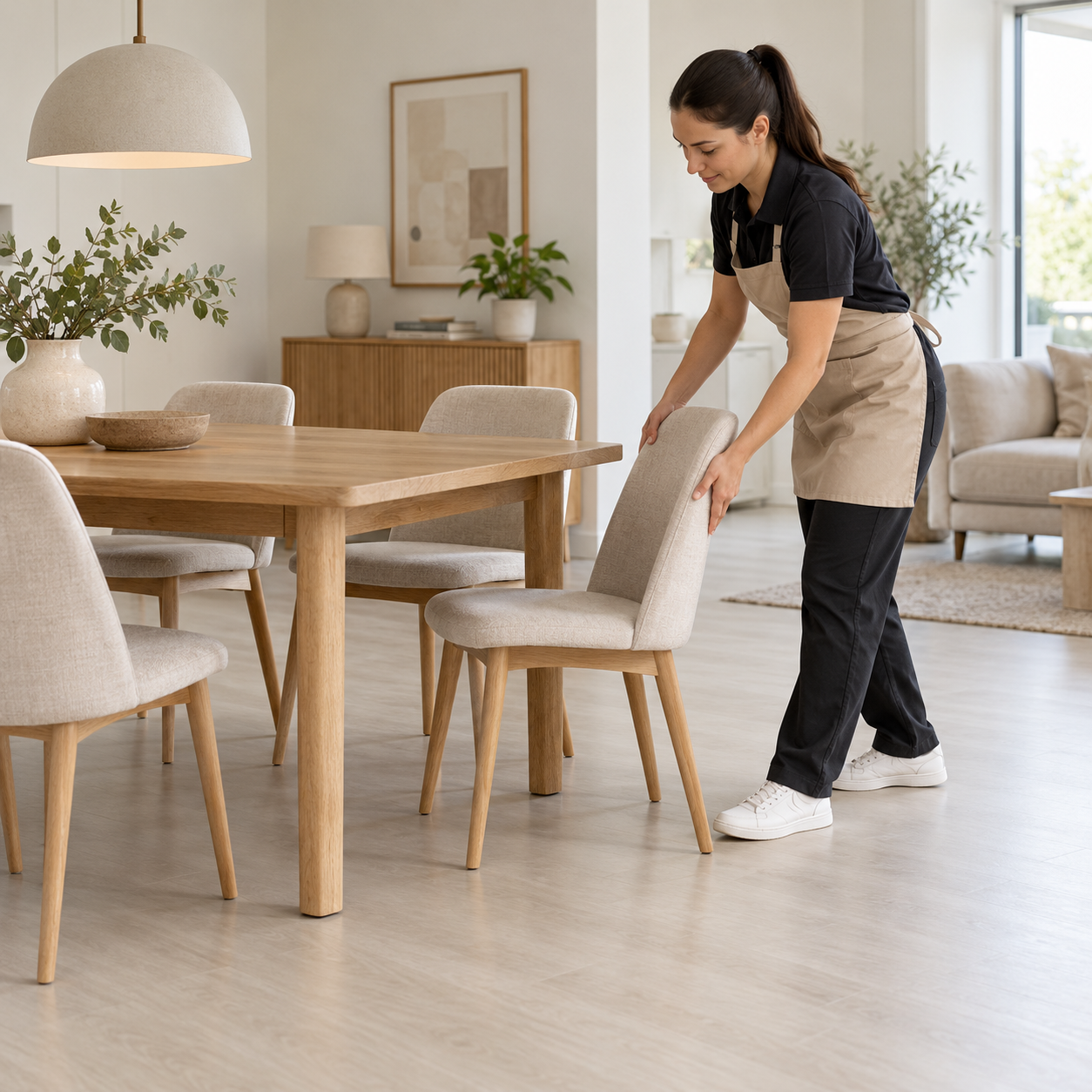
Move what you can. Clean what you can't.
Before cleaning, move lightweight furniture and objects when safe to do so.
This allows you to vacuum and mop underneath tables, chairs, decorations and other items.
Never move extremely heavy, fragile or expensive items that could be damaged.
Always return moved items to their original positions.
03 / Vacuuming
Don't just vacuum. Vacuum thoroughly.
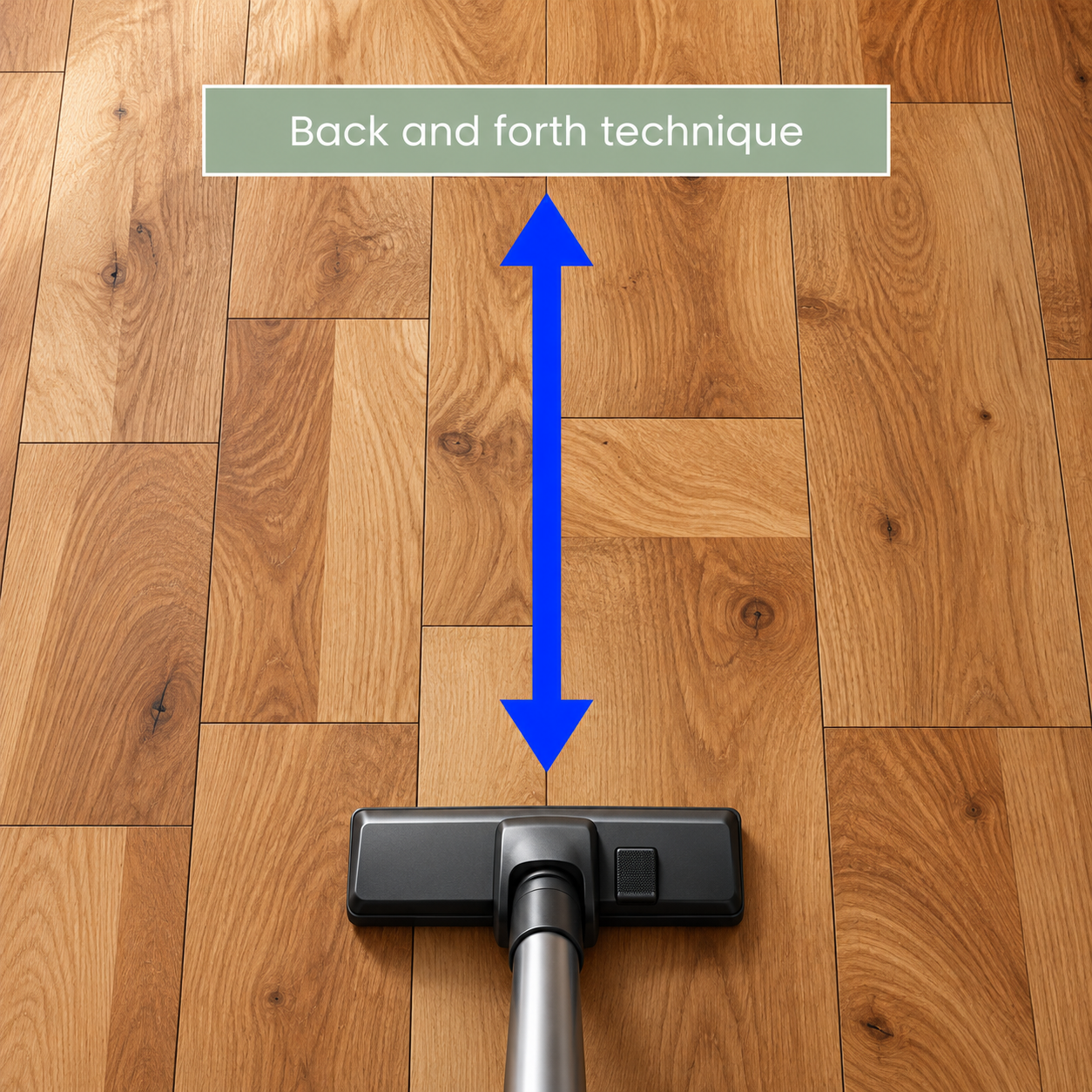
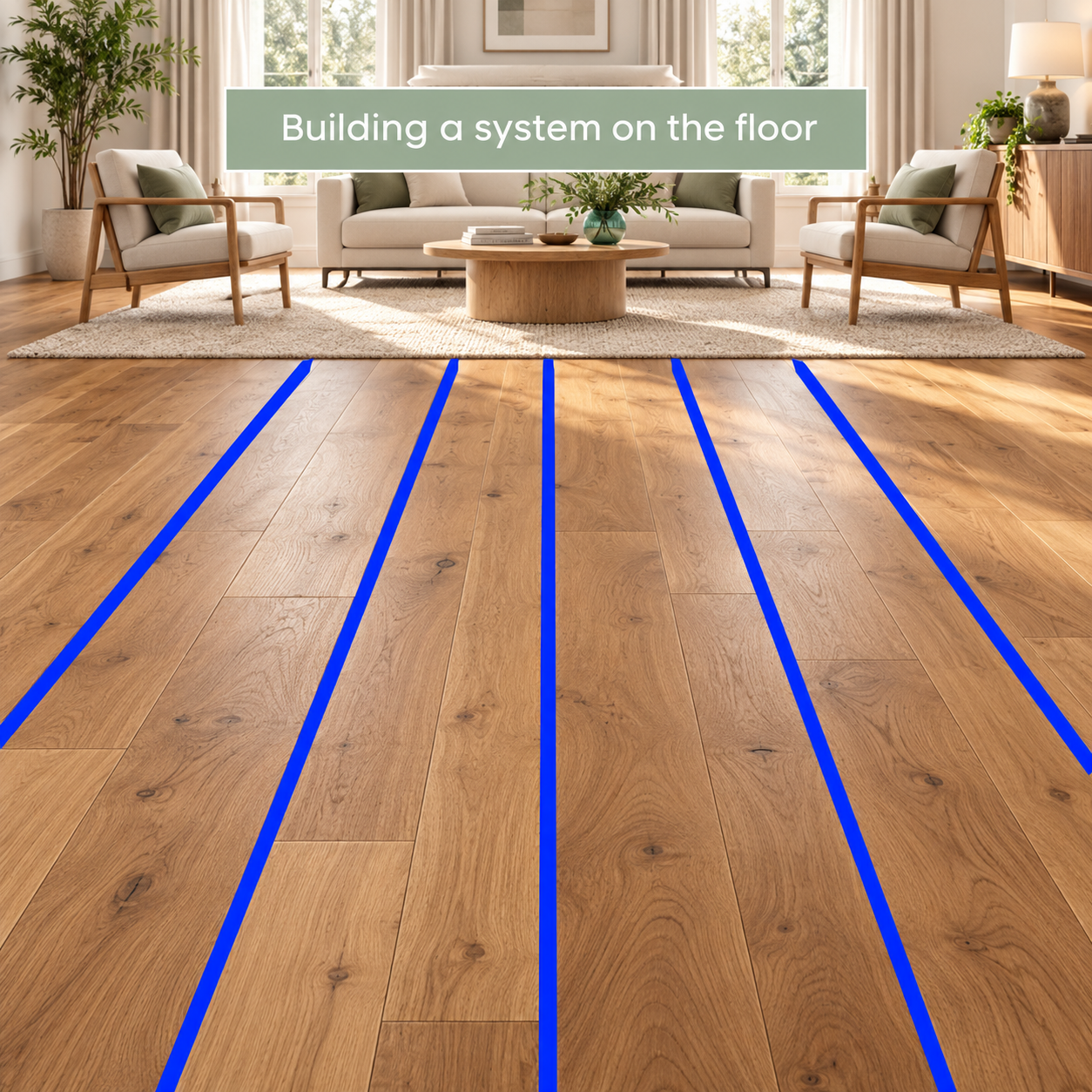
Vacuuming requires a systematic approach to ensure no areas are missed.
Work systematically across the room.
Use the Back-and-Forth Technique, covering each area twice.
Follow floor patterns or natural sections to track your progress.
Pay attention to corners, edges and underneath furniture.
Changing the Vacuum Bag
If the vacuum loses suction, check whether the bag needs replacing.
Replace full bags with the correct type and dispose of used bags in the appropriate waste bin.
04 / Preparing Your Mop
Clean water. Clean mop. Better results.
For most floors, we use clean water and microfiber mops without additional cleaning chemicals, provided the flooring manufacturer's instructions allow it.
How to Prepare:
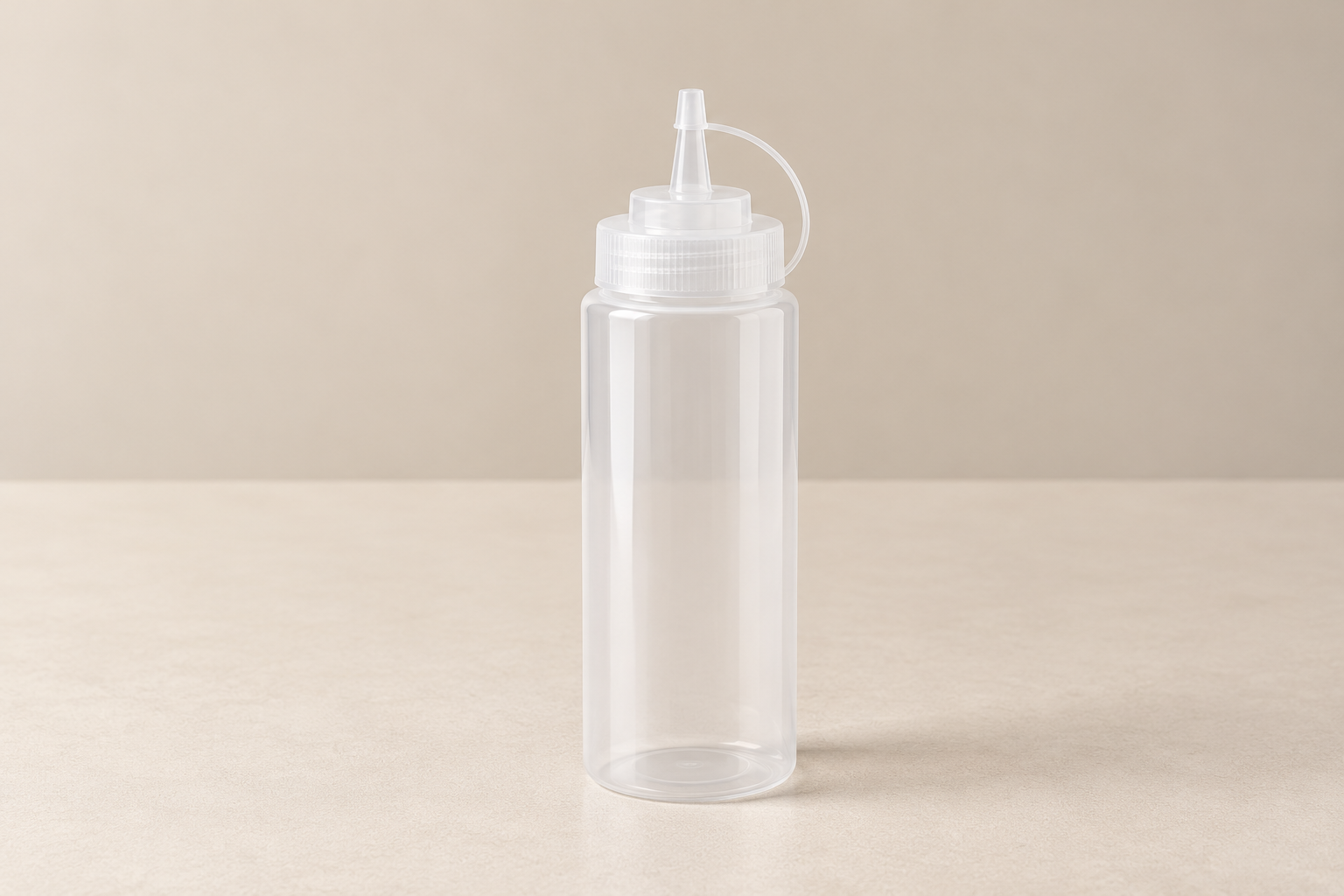
Fill the water bottle with lukewarm water.
Lightly dampen a clean microfiber mop.
Make sure the mop is moist, not soaking wet.
Begin cleaning using the correct technique.
Change your mop after approximately 20–30 m², or sooner if it becomes dirty or dry.
05 / The Snake & Square Techniques
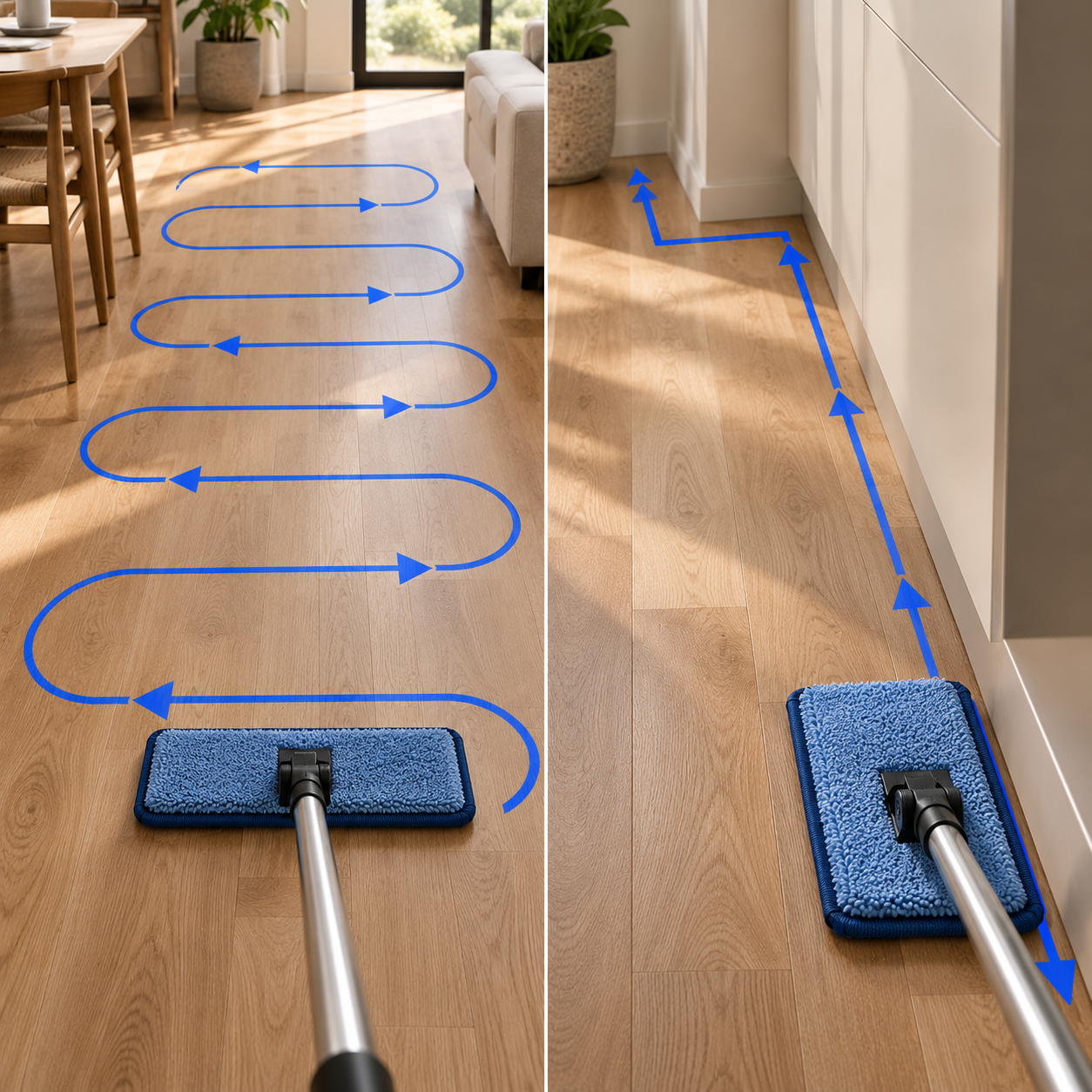
The Snake Technique
Use controlled, overlapping snake-like movements to collect dirt rather than spreading it around.
Work systematically across the floor.
Repeat movements when necessary to remove stubborn marks.
Ensure every area is covered.
The Square Technique
Before using the Snake Technique, clean along the edges of the room.
Mop along walls, corners and edges.
Pay special attention to areas around and underneath toilets.
Use repeated back-and-forth movements for stubborn dirt.
Finish the remaining floor using the Snake Technique.
Square first. Snake second. No missed spots.
06 / Changing Mops
Always use a fresh mop:
After cleaning a bathroom, before moving to other rooms.
After approximately 20–30 m² of floor.
Whenever the mop becomes too dirty or dry.
This prevents cross-contamination and helps avoid streaks and dirt spreading across the floor.
When Is Floor Cleaner Needed?
Most floors can be cleaned effectively with water and microfiber mops.
If additional cleaning is necessary, only use a product approved for the specific flooring material, following the manufacturer's instructions.
Never apply chemicals directly to a floor unless specifically instructed to do so.