Job Structure & Cleaning Techniques
Consistency is the key to quality.
At Shyne, we believe that exceptional cleaning isn't just about working hard. It's about working smart, following the right procedures and delivering the same high standard every single time.
That's why we follow a structured approach to every cleaning job.
01 / Why Structure Matters
The McDonald's Principle
Think about ordering a cheeseburger at McDonald's.
Whether you're in Los Angeles or Aarhus, you know exactly what to expect. The burger looks and tastes almost the same, no matter where you are.
That's not a coincidence.
It's the result of carefully designed processes that are followed consistently.
At Shyne, we apply the same principle to cleaning.
Every cleaning job consists of a series of tasks that must be completed in a specific order.
Our cleaning procedures are designed to help us:
Deliver consistent quality – Every client receives the same high standard.
Work efficiently – Reduce unnecessary movements and wasted time.
Avoid missed tasks – Follow a clear structure from beginning to end.
Create reliable results – Deliver the Shyne Standard, regardless of who performs the cleaning.
Whether we're cleaning a home in Aarhus or a property in Herning, the result should always meet the same expectations.
02 / The Sequence Rule
Follow the structure. Every time.
To maintain consistency and quality, we follow one essential rule:
Always complete cleaning jobs and tasks in the specified order, from top to bottom.
The sequence is not a suggestion. It's a fundamental part of how we work.
By following the same structure every time, we create a reliable and efficient cleaning process that delivers the quality our clients expect.
Same process. Same quality. The Shyne Standard.
Following the Jobber Sequence
The right order makes all the difference.
Every cleaning job in Jobber has its own checklist, designed specifically for that property.
Always follow the checklist chronologically, from top to bottom.
Why does the order matter?
Imagine starting a cleaning job by dusting ceilings, lamps and high surfaces.
Dust naturally falls onto lower surfaces and floors, which can then be cleaned afterwards.
If you dust at the end, you'll make already-clean surfaces dirty again and have to repeat your work.
More work. More time. Not very efficient, right? 😊
Every job is different.
Each Jobber checklist is carefully structured to ensure efficiency and consistent quality.
This means that the starting point, tasks and finishing point may vary between properties.
Never assume two jobs follow the same sequence. Always follow the specific Jobber checklist.
Remember
Follow the sequence. Avoid double work. Deliver consistent quality.
Following the Breezeway Sequence
Same sequence. Every time.
For all Selected Homes apartments, we use Breezeway to manage our cleaning tasks.
Unlike Jobber, all Standard Cleaning tasks in Breezeway follow the same sequence and requirements.
Always complete the tasks chronologically, from top to bottom.
The Breezeway Cleaning Sequence
Bring clean linen and towels from the basement
Pack and bring the cleaning wagon
Rate the condition of the apartment
First things first – check for forgotten items and start the dishwasher if needed
Bedrooms
Kitchen
Dining room
Living room
Bathrooms
Balcony
Supply closet
All rooms
Final check
Why does the order matter?
Think about the dishwasher.
By checking and starting it at the beginning of the cleaning, it will likely finish before you're done, allowing you to empty it before leaving.
If you start it too late, you might have to wait or return later.
More time. Unnecessary work. Not very efficient, right? 😊
Remember
In Breezeway, the Standard Cleaning sequence is always the same. Follow every step in order to ensure efficiency and consistent quality.
Job Equipment
Equipment needed for each job
For all jobs:
Aside from the regular equipment and chemicals, ensure to bring enough cloths, kitchen towels and mops for each job, to ensure that we can perform correctly.
For Selected Homes Apartment:
Blue cloths: 2-6 cloths
Pink cloths: 1 cloth per toilet
Mops: 2-10
For a typical office and private client:
Blue cloths: 8-15 cloths
Pink cloths: 2-8 cloths (Depending on number of bathrooms)
Mops: 2-10
Kitchen towels: 1-5
For a move-out cleaning:
Blue cloths: 15-30 cloths
Pink cloths: 2-8 cloths (Depending on number of bathrooms)
Mops: 6-14
Kitchen towels: 1-5
When Should You Change Mops & Cloths?
Mops:
Use one mop for approximately 20–30 m² of floor before replacing it with a clean one.
For example, a 100 m² apartment typically requires around 5 mops.
Changing mops regularly prevents dirt from spreading and helps avoid visible marks and streaks.
Cloths:
Always follow our colour-coding system:
Pink cloths: Toilets only.
Blue cloths: All other surfaces.
Change cloths frequently to avoid spreading bacteria, grease and chemical residue between surfaces.
Remember
When in doubt, always use an extra clean cloth.
05 / The Snake Technique
Clean smarter. Not harder.
At Shyne, we use the Snake Technique whenever we wipe surfaces or mop floors.
It's a simple but effective method that ensures we collect dirt instead of just spreading it around.
How Does It Work?
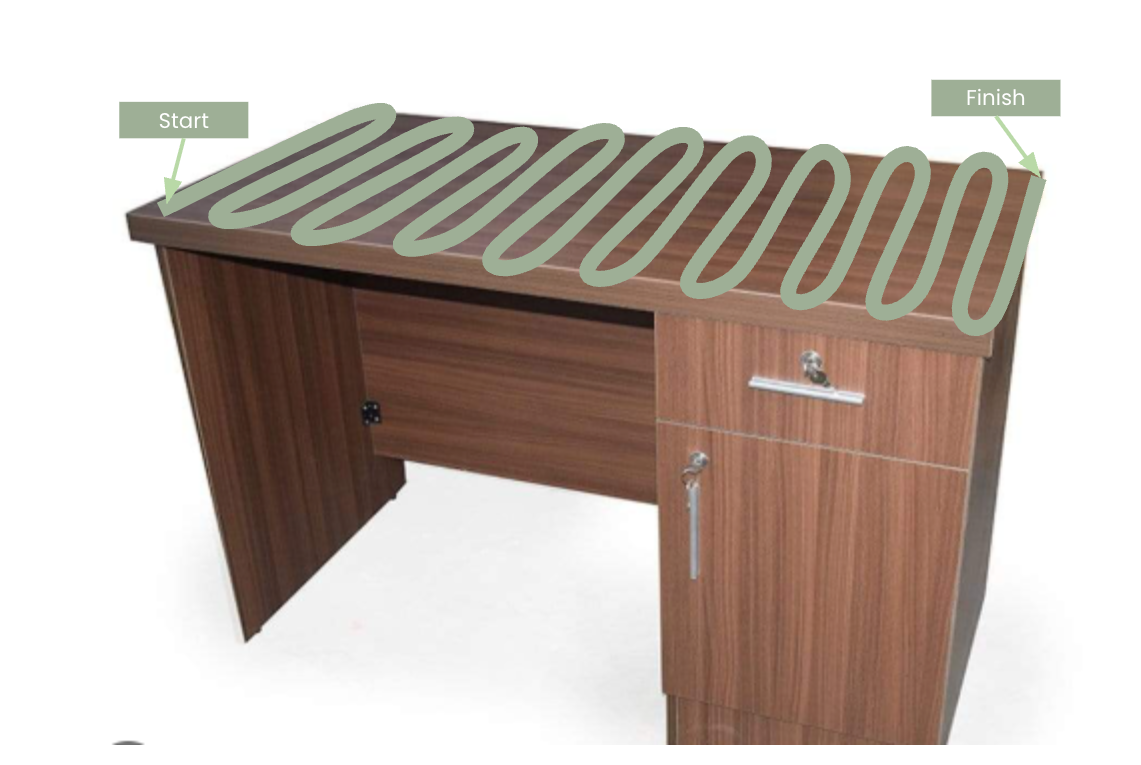
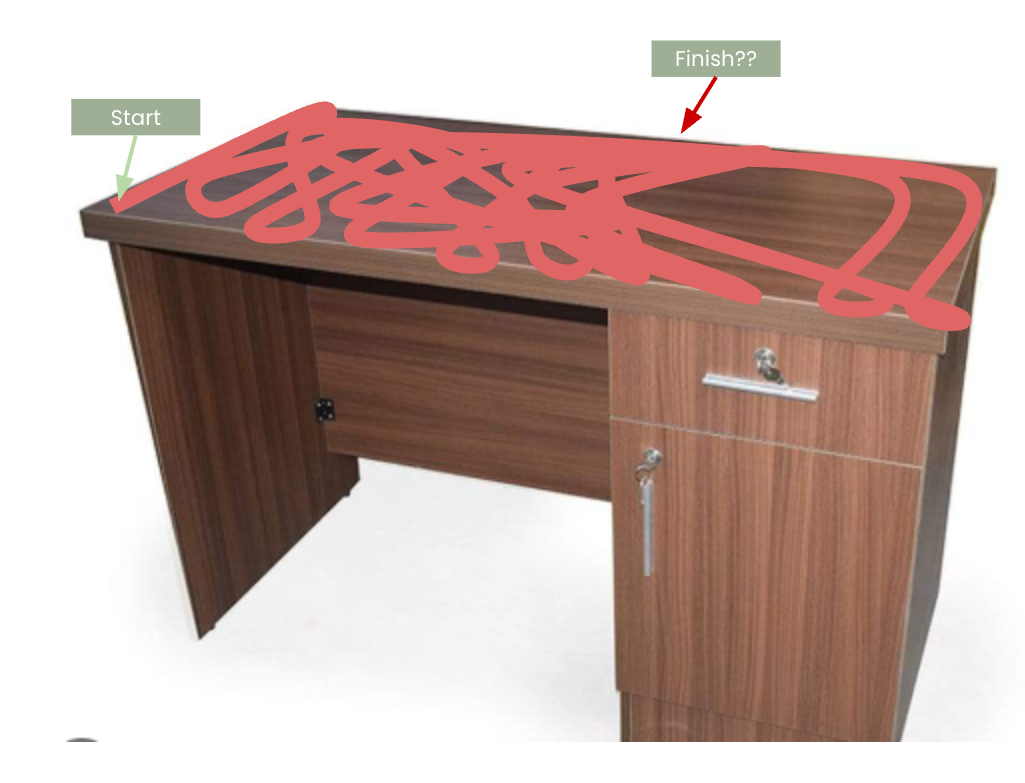
Imagine wiping down a table.
By moving your cloth in a continuous, overlapping snake-like pattern, you systematically cover the entire surface and collect dirt, dust and stains along the way.
This helps us avoid missed spots and ensures a thorough, consistent result.
The goal is simple: Pick up the dirt. Don't just move it around.
The Right Way vs. The Wrong Way
✓ The Right Way
Follow a structured snake-like pattern, covering the entire surface without skipping areas.
✗ The Wrong Way
Wiping randomly can leave behind dirt, dust and stains, resulting in an uneven clean.
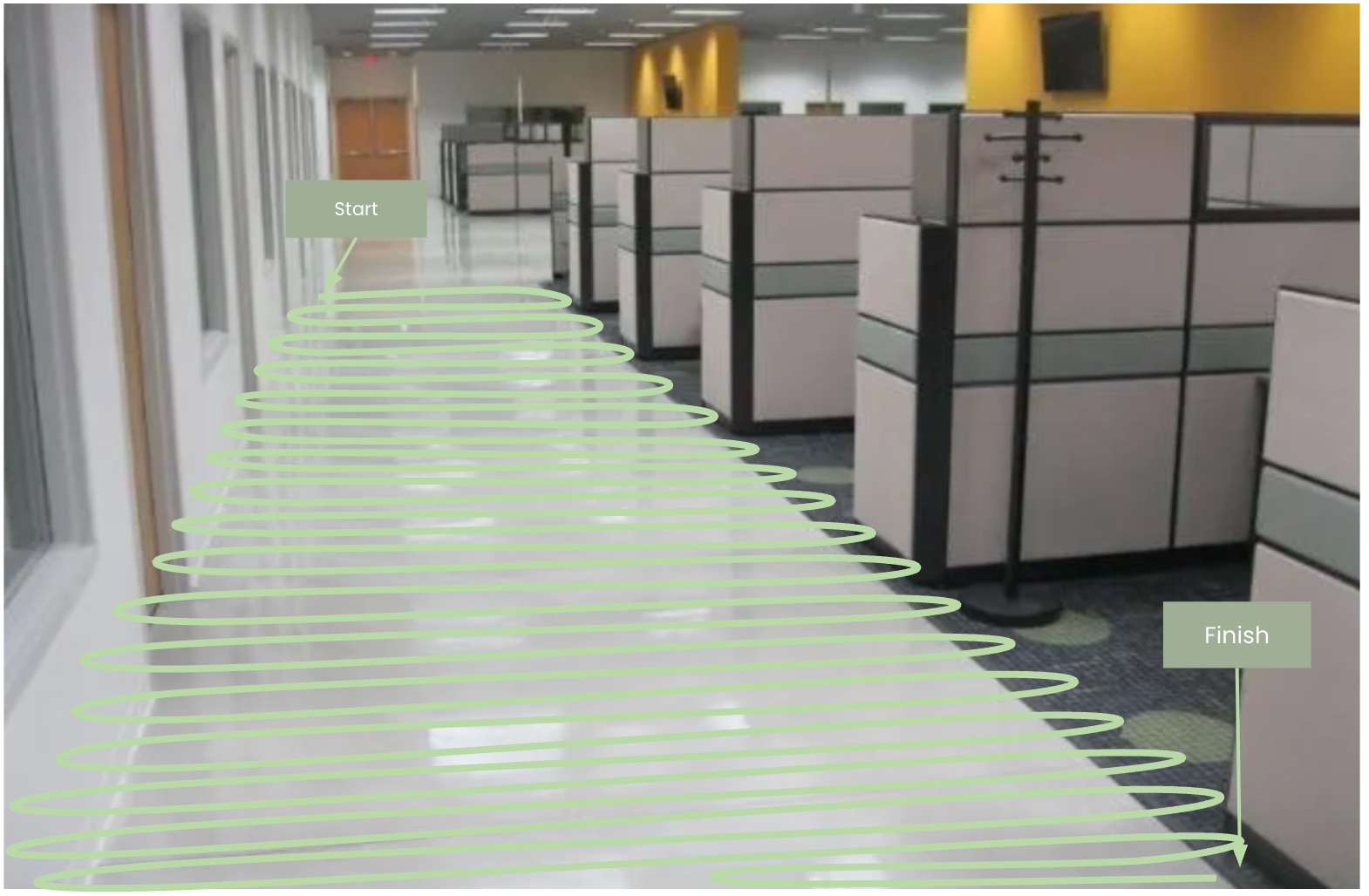
Using the Snake Technique on Floors
The same principle applies when mopping.
Move the mop in a controlled snake-like pattern, systematically covering the floor without missing areas.
06 / Presentation & Attention to Detail
It's the little things that make the difference.
At Shyne, we don't just focus on cleanliness. We also care about how a space looks and feels when we leave.
Small details might seem insignificant, but together they create a polished, professional result.
What Does Attention to Detail Look Like?
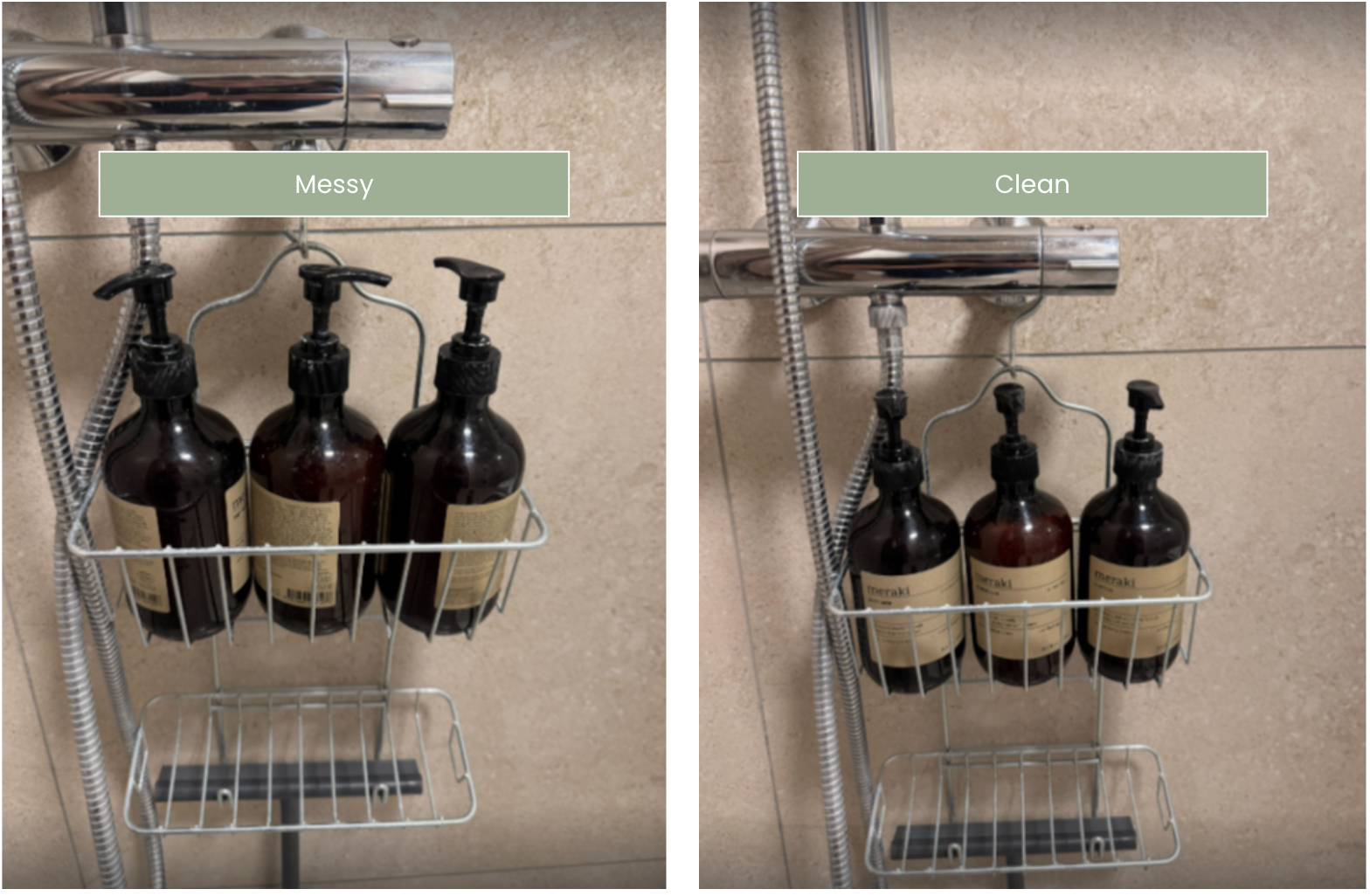
01 / Hand Soap
Make sure the hand soap is placed neatly with the label facing forward, rather than towards the wall.
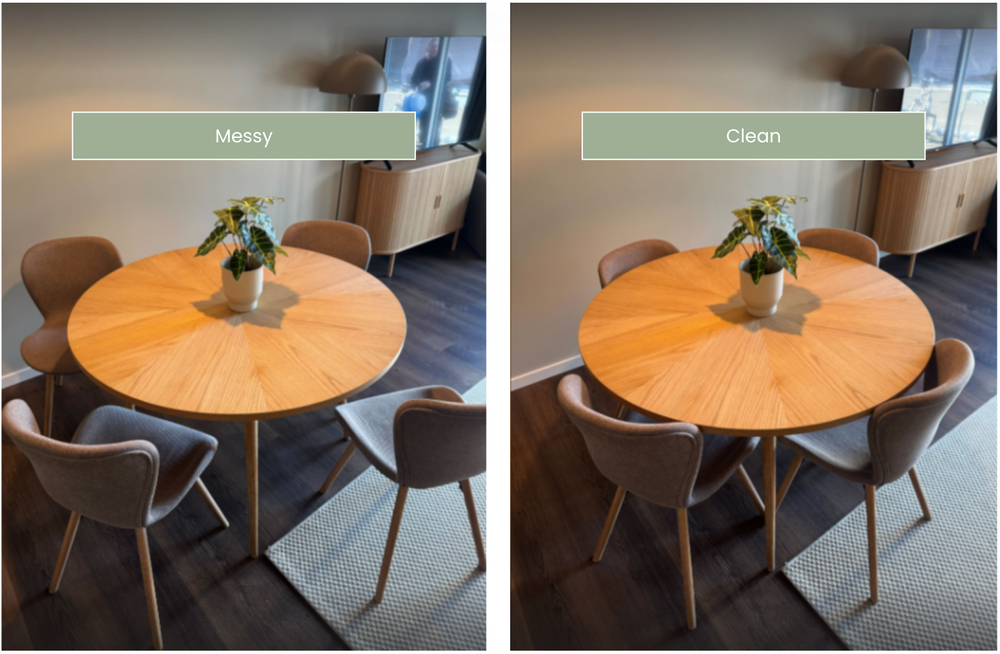
02 / Chairs & Tables
Arrange chairs neatly around the table and make sure decorative items, such as plants, are positioned nicely.
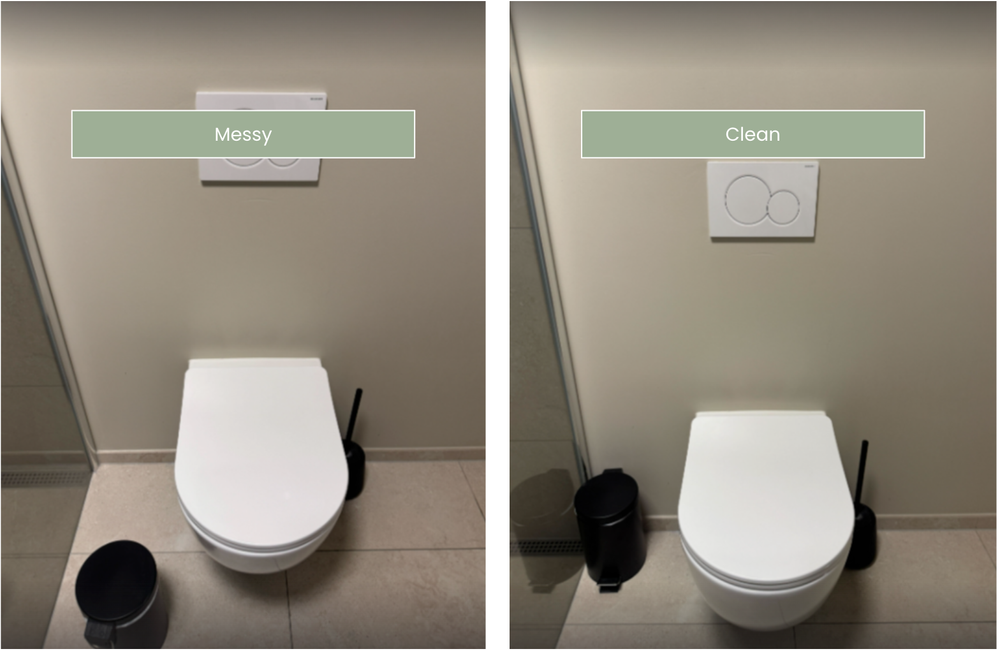
03 / Bathroom Details
Place the bathroom trash can neatly beside the toilet rather than directly in front of it.